Wednesday, March 27, 2019

The Long and Winding Road: Making Resilience Real

More than 40 years ago the economist John Kenneth Galbraith remarked that the world had arrived at the “Age of Uncertainty.” Fast forward to 2019 and human society’s pace of change is ever more rapid. Artificial intelligence, the internet of things, climate change, the rise of China and India, among other factors, have multiplied the challenges and risks. We cannot get back to a less connected world, nor can we dismiss concerns about the major challenges we face. Indeed, technological, social and environmental drivers will transform our world into an even riskier place in 2050 than it already is today. 

Human society faces many challenges ahead;
creating a sustainable and resilient world
will not be a straightforward journey.
Credit: Free-Photos (public domain)

In other words, to ensure that we are on track toward a sustainable future, we urgently need decision-making that allows social-ecological-economic systems to ‘bounce back’ or to become transformed, such that our planet maintains desirable (from a human and planetary perspective) properties.

Several major insights emerge from theoretical, model and empirical considerations:

  • Integrated modelling, robust decision-making, methods from the nexus and proven practices offer innovations that can transform ‘business as usual’ into responses to risks.
  • In the decades to come, a failure to integrate new approaches into the decision-making of public and private sectors could be catastrophic. 
  • To successfully face our world’s challenges, we cannot return to a world that no longer exists.

We urgently need to transform our decision-making, and use innovative and proven methods to deliver a sustainable and resilient world for tomorrow. This will be a long and winding road, but a journey we must make together.


R. Quentin Grafton (The Australian National University) and Ben van der Pluijm (University of Michigan)

Citation: Grafton, R. Q., and B. van der Pluijm (2019), The long and winding road: Making resilience real, Eos, 100, https://doi.org/10.1029/

Wednesday, February 06, 2019

Book Review of "Timefulness", by Marcia Bjornerud

Book Review:
"Timefulness: How Thinking Like a Geologist Can Help Save the World."
by Marcia Bjornerud.
Princeton University Press.


I don’t read that many books these days, I must admit. Indeed, Jeff Goodell’s much celebrated "The Water Will Come" remains mostly unread on my nightstand. So when the request to review Marcia Bjornerud’s Timefulness appeared I gladly accepted this motivating opportunity. This little book is only ~180 pages, but its size masks the breadth of coverage and detail presented. In five substantive chapters and several informative appendices, the book explores geologic time, tectonics and landscapes, atmospheric evolution, and modern (Ice Age) time, and offers, in the last chapter, a reflective take on today and our future.

Following a brief introductory chapter, a series of four self-contained chapters offer a breezy approach to major topics in the Earth Sciences that are taught in most colleges these days. In fact, I assume that they reflect the activities of the author in this realm, given the relevant examples and key details in places. Combining a pleasant writing style with just enough science information creates informative long-form journalism style pieces on these major topics. The takes in each chapter reflect the majority opinion on a topic and do not stray into new or minority opinions. For example, when getting to climate action in the atmospheric section, the descriptions of geo-engineering approaches are (appropriately?) guarded and not about urgency for correcting, perhaps risky action. Given that the book’s name is a play on mindfulness, these chapters are less transcending than the title and sleeve cover would suggest, but they are certainly informative and complete. Much use is made of creative quotes and section titles, as well as (mostly dead) geo-star icons. The concept of geologic time, or Deep Time, is sprinkled throughout, hence the book’s title, although the latter chapters are mostly about Modern Time. The final chapter, ‘Timefulness, Utopian and Scientific’, is a joy to read. It is the engaging type of writing one finds in The New Yorker or similar, and the author’s skill as a writer shines. As before, no new ground is covered, but the content and structure make it a compelling read. Among other uses, it makes a wonderfully motivating piece for today’s students that grudgingly take their required science course.

This book will appeal to the ‘John McPhee audience’. It makes for a great gift to friends and family interested in meaningful science and Earth Science history. Unlike many of today’s pieces in magazines and blogs, it is not preachy and offers the reader the underlying science in sufficient detail to develop an understanding and perhaps an opinion on the challenges before us. The Anthropocene makes its appropriate entrance near the end, linking geology of the long past to issues of today and tomorrow. As the author philosophically concludes, ‘we need to grow up and navigate on our own’.

From:
Holocene book review: Timefulness: How Thinking Like a Geologist Can Help Save the World. The Holocene, 2019, 29(2), 363–363.
https://doi.org/10.1177/0959683618819934

Thursday, January 24, 2019

What Generation Z likes in 1960-1980 rock/pop music


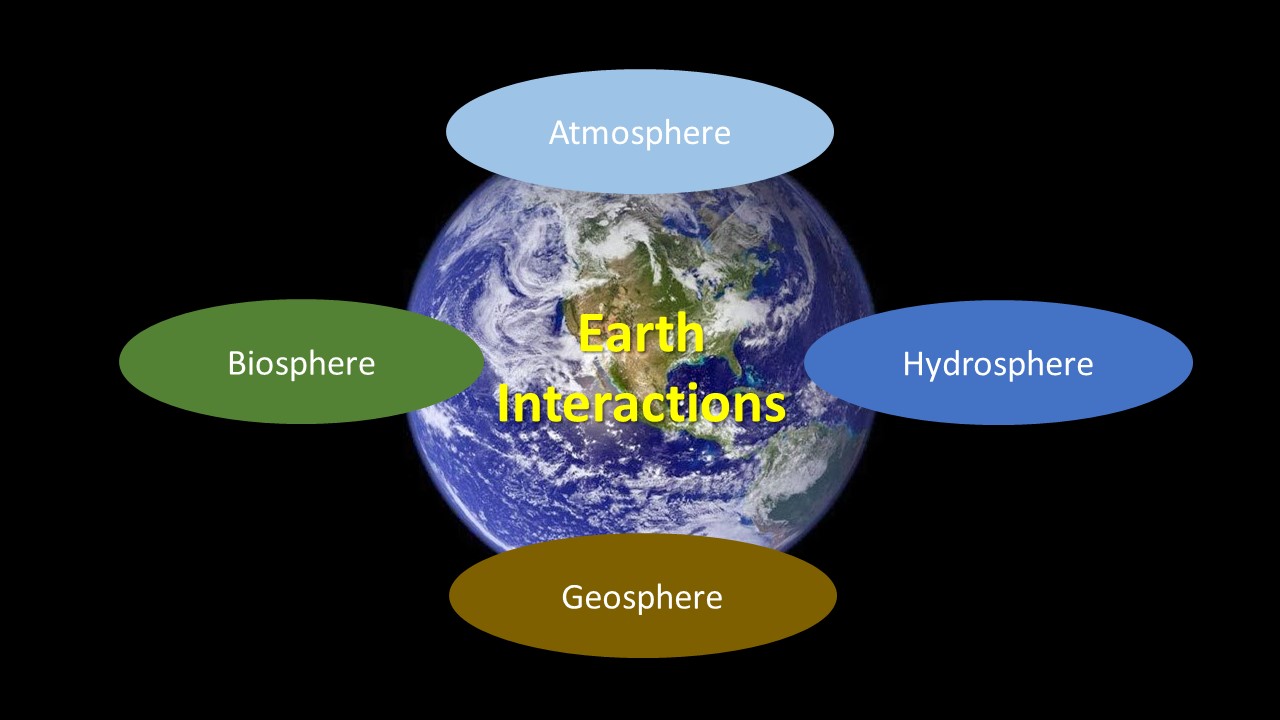
In a very professional music survey that only relies on songs I like, about 100 undergraduates at the University of Michigan voted on their favorite tunes that were played at the opening of each class in Earth Interactions (E119).  The class started with "We Will Rock You" (which we did) and ended with "Hello, Goodbye".  Voting on 39 songs was in 3 thematic sets; no crossover options. You may notice that all songs have an Earth theme (though requiring a little thinking for some, like Ben Folds). 


Clearly, there is a lot of Queen love in Fall 2018, while much less for icons like REM, Springsteen and Stones. The full list of songs and their scores (1 vote per set of 13 songs):

Under pressure – Queen/Bowie 30
We will rock you – Queen 24
Mr Blue Sky - ELO 22
Time – Pink Floyd 19
Ring of fire - Johnny Cash 18
Hello, Goodbye – Beatles 17
It's my Life - Bon Jovi 15
Good vibrations - Beach Boys 14
Ice ice baby – Vanilla Ice 13
I am a rock – Simon & Garfunkel 12
The times they are a-changin’ – Bob Dylan 9
Have you ever seen the rain – CCR 9
Changes – David Bowie 8
Waiting on the world to change – John Mayer 8
Every breath you take – Police 8
Rock the casbah – The Clash 8
Starman – David Bowie 7
It’s the end of the world as we know it – REM 6
Wild World – Cat Stevens 5
Army - Ben Folds Five 5
Down by the river - Neil Young 5
Always look on the bright side of life - MP 4
Surfin' USA – Beach Boys 4
Badlands - Bruce Springsteen 3
Village ghetto land - Stevie Wonder 3
Rock of ages - Def Leppard 3
Little red Corvette – Prince 2
Rain - Beatles 2
Fire and Ice – Pat Benatar 2
Kokomo Beach- Beach Boys 2
Shiny happy people – REM 2
Great balls of fire - Jerry Lee Lewis 2
Land of confusion – Genesis 1
River deep, mountain high – Ike & Tina Turner 1
Rockaria – ELO 1
Rock this town – Stray Cats 1
Rockville – REM 0
Rock and a hard place – Rolling Stones 0
Who'll stop the rain – CCR 0


Friday, September 07, 2018

We Can Work It Out: Strengthening Societal Resilience to Natural Hazards

Amir AghaKouchak - University of California, Irvine CA
Ben van der Pluijm - University of Michigan, Ann Arbor MI


Flooding from Hurricane Harvey in Port Arthur, Texas (August 2017). 
Photo by U.S. National Guard.

Strengthening societal resilience by focusing on the interactions between natural hazards, the built environment and human societies


The costliest hurricane season in the history of the United States, widespread flooding in South and Southeast Asia, and wildfires and droughts around the world made 2017 the most impacting disaster year so far. Natural hazards are part of our planet’s life cycle, but are increasingly resulting in devastating human disasters (e.g. 2010 Haiti Earthquake; 2004 Indian Ocean Tsunami; 2005 Hurricane Katrina; 2008 Cyclone Nargis; 2011 Tohoku Tsunami; 2017 US hurricanes, 2016-18 California and Canada Wildfires; 2018 global heatwaves), highlighting our vulnerability to extreme events around the world. The key question is: What does it take to prevent natural hazards from becoming human disasters? 

Addressing this question requires a critical look at the societal response to extreme events. A society that experiences frequent earthquakes often responds by improving regulations and building codes to enhance its resilience against future quakes. Over time, even a major natural hazard (e.g., an earthquake) may not lead to a human disaster. A moderate event in an unexpected region or unprepared society, on the other hand, can easily turn into a human disaster without proper preparation. Understanding critical thresholds are fundamental to prevent natural hazards from becoming human disasters, leading to another important question: How can the scientific community inform societies about critical thresholds and strengthen their resilience against natural hazards? 

In the geoscience community, most studies on natural hazards focus on describing and understanding (historical and projected) changes to frequency and intensity of extreme events (e.g., floods, earthquakes, heat waves, droughts, surge, wildfires). However, society’s critical thresholds largely rely on existing infrastructure and our coping capacity. The engineering community has a long tradition of designing infrastructure based on observed historical extremes (considering some safety factors to address variability and uncertainties in historical data), but in many regions the statistics of extremes (mean, frequency, variability) have changed and will continue more so in the future. Thus, any change in the way we prepare our societies and design our built environment would also require support from policy makers. This calls for the three research communities, geoscience, engineering and policy, to focus more on the interactions between natural hazards and the built environment and human societies. In the following, we discuss three areas that warrant attention.

Frameworks for understanding how the interwoven relationship between hazards and the built environment may amplify or suppress likelihood of a human disaster

In February 2017, a series of extreme rainfall events led to failure of the spillway of the Oroville Dam in California, requiring sudden evacuation of nearly 200,000 residents [Vahedifard et al., 2017; Hutton et al., 2018]. A false sense of security follows building major infrastructure systems to protect us against natural hazards; a notion known as the levee effect [Di Baldassarre et al., 2015; Hutton et al., 2018]. The levee effect indicates how lack of (or infrequent) exposure to hazards increases the societal vulnerability to a major human disaster. Given continues developments around the world and changing characteristics of natural hazards, we need more integrated research to develop theoretical and empirical frameworks for modeling and describing this levee effect and its potential to amplify the likelihood of human disasters.

Understanding the cumulative cost/impacts of non-extreme events

Most of the ongoing research on natural hazards focuses on extreme events/disasters with significant impacts. However, recent studies show that low cost and diffuse incidents over time can aggregate into very high cost outcomes [Moftakhari et al., 2017]. While these non-extremes events, such as nuisance flooding, may not lead to human disasters directly, they drain the resources of societies and limits their ability for long-term resilience planning and management. When responding to non-extreme events, acting too soon can waste resources, but acting too late can lead to substantial financial losses. Some of the most critical decisions for policy-makers and stakeholders are when and where to invest in prevention measures, and how to evaluate the financial return. Given observed and projected sea level rise, nuisance flooding has become a paradigm example of frequent minor events with substantial long-term impacts. Unfortunately, our ability to study non-extreme events are limited by lack of data on their impacts/costs, mainly because such events do not receive a great deal of attention. To improve our understanding of non-extreme events and to evaluate when and where to invest in protective measures, we need coordinated research on this topic and more systematic data collection and impact assessment frameworks. 

Compound events

Most natural hazards (e.g., floods, droughts, wildfires, heatwaves) are caused by a combination of interacting and inter-related physical processes across multiple spatio-temporal scales. This combination of hazards, processes and drivers leading to substantial impacts defines a compound event [Zscheischler et al., 2018]. Most of the existing risk assessment frameworks consider one hazard or driver at a time, potentially leading to underestimation of the risk of natural. Furthermore, a combination of multiple non-extreme events can lead to extreme impacts (e.g., a moderate drought and above average temperatures leading to significant reduction in crop yield). In other words, multiple relatively frequent events occurring together can lead to a high impact, low probability outcome. As above, coordinated research and development for understanding the risk of compound events and their impacts are needed. This is particularly fundamental to improving projections of high-impact events in a changing climate (Sadegh et al., 2018).

References

Di Baldassarre G., et al. 2015. Debates—Perspectives on socio‐hydrology: Capturing feedbacks between physical and social processes. Water Resources Research, 51(6), 4770-4781
Hutton, N. S., et al., 2018. The Levee Effect Revisited: Processes and Policies Enabling Development in Yuba County California. Journal of Flood Risk Management, e12469.
Moftakhari H.M., et al., 2017a. Cumulative Hazard: The Case of Nuisance Flooding, Earth's Future, 5 (2), 214-223, doi: 10.1002/2016EF000494.
Sadegh M., et al., 2018. Multi‐Hazard Scenarios for Analysis of Compound Extreme Events, Geophysical Research Letters, doi: 10.1029/2018GL077317.
Vahedifard F., et al., 2017. Lessons from the Oroville Dam, Science, 355 (6330), 1139-1140, doi: 10.1126/science.aan0171.
Zscheischler J., et al., 2018. Future Climate Risk from Compound Events, Nature Climate Change, 8 (6), 469-477, doi: 10.1038/s41558-018-0156-3.


Modified from AGU Ed Vox: We Can Work It Out: Avoiding Disasters.
Follow us on Twitter: Amir AghaKouchak is @AmirAghaKouchak, Ben van der Pluijm is @vdpluijm